


Parliaments are being asked to respond to complex, long-term and often divisive policy challenges. At the same time, they must maintain public trust and show that citizens’ concerns are being heard.
Traditional forms of public engagement, such as consultations, surveys and lobbying, remain important. But they do not always provide the kind of informed and considered public judgement needed to address today’s most difficult policy questions.
Citizens authorise their representatives through elections. But the complexity of contemporary governance means that democratic engagement cannot begin and end at the ballot box.
Citizen deliberation offers a way to strengthen the relationship between parliamentarians and the public. Processes such as mini-publics bring together broadly representative groups of citizens to learn, deliberate and develop informed recommendations on public issues.
For parliamentarians, these processes can provide valuable insight into how citizens understand complex policy trade-offs. For citizens, they create a more meaningful role in shaping public decisions between elections.

Around the world, democratic innovations such as citizens’ assemblies, citizens’ juries and participatory budgeting have shown how everyday people can contribute to political decision-making in informed and constructive ways.

These processes can help build trust and confidence in democratic institutions. They can also make decision-making more accountable, responsive and connected to the communities parliaments serve.
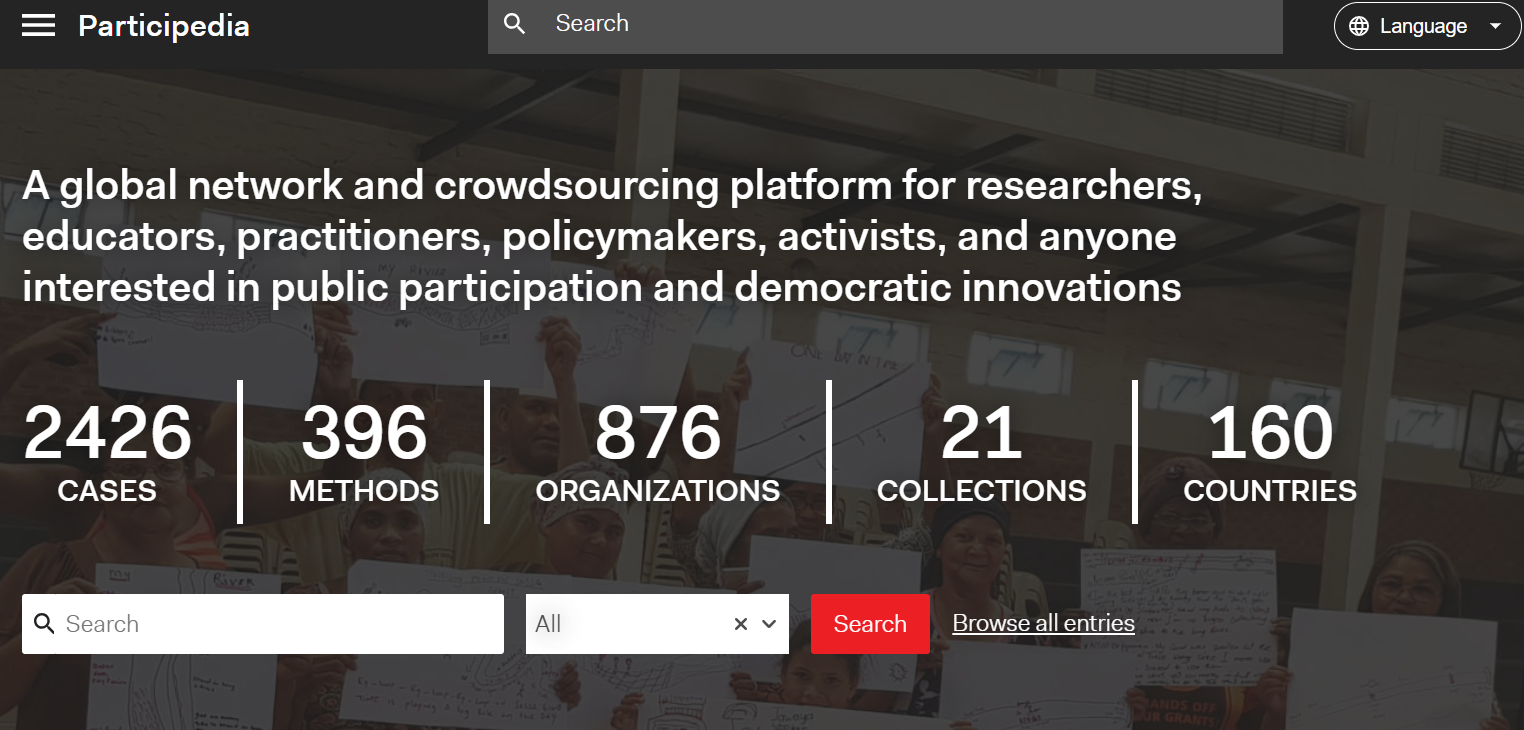
The global platform Participedia documents more than 2,300 examples of democratic participation across more than 160 countries, including Australia.
These examples show that citizen deliberation is not a single model. It is a growing field of practice, with different approaches designed for different political systems, communities and policy challenges.
Citizen deliberation is grounded in the idea that democracy is not only about counting votes. It is also about the quality of public reasoning, listening and discussion that happens between elections.
Deliberative democratic innovations create structured opportunities for citizens to consider evidence, hear different perspectives and work through disagreement. They support a more “talk-centred” approach to democracy, where legitimacy depends not only on electoral representation, but also on the quality of public conversation and citizen involvement.
Democracy is not only about elections. It is also about the quality of public conversation between them.
When designed well, citizen deliberation can strengthen parliamentary democracy. It can give representatives deeper insight into public judgement, create new channels for citizen participation, and help institutions respond to complex issues with greater legitimacy.
Citizen deliberation does not replace elected representation. It complements it by bringing citizens’ informed perspectives into the work of parliament.
Citizens’ assembles are a form of mini-public. They bring together a broadly representative group to learn about, deliberate on, and make recommendations about a policy issue.
These assemblies are often used for questions of national or international significance. They are especially useful where a major public concern would benefit from informed judgement by ordinary citizens, rather than decisions shaped by partisan debate or vested interests.
Ireland is one of the best-documented examples of using citizens’ assemblies at the national level to consider major policy questions.
Following a Constitutional Convention (2012-2014) that considered socially and politically salient issues, including same-sex marriage and the voting age, a permanent body of 100 randomly selected citizens was established by parliamentary resolution in 2016 to enhance citizen involvement in Irelands political decision-making.
The resolution committed the Government to support the Assembly through funding and to give serious consideration to its recommendations. A joint committee of both Houses of Parliament was also established to examine Assembly reports.
While the Government is not legally required to adopt the Assembly’s recommendations, it must provide a formal response to the legislature. Where a recommendation is accepted, the Government must also set out a timetable for a public referendum, where required.
Since 2016, Ireland has held national citizens' assemblies on abortion, climate change, the conduct of referendums, fixed term parliaments, challenges of an ageing population, gender equality, biodiversity loss, and drugs use.
The City of Melbourne’s People’s Panel provides a strong Australian example of citizen deliberation in practice.
In 2014, 43 citizens were selected through stratified random sampling to reflect Melbourne’s diverse community. They were asked to advise on the city’s 10-Year Financial Plan, a $5 billion budget strategy.
Over several weekends, panel members heard from experts, questioned councillors and worked through competing priorities. The panel produced 11 recommendations, many of which were adopted in the final plan and helped shape the city’s long-term financial and infrastructure decisions.
An independent evaluation found the process to be inclusive, transparent and good value for money. Participants also reported high levels of trust in the process and confidence that council had responded seriously to their work.
While local in scale, the Melbourne case shows what is possible when governments entrust citizens with genuine deliberative authority.
These examples, and many others, demonstrate that Australia can grapple with complex policy trade-offs, and that deliberative processes can produce credible, useful, and publicly legitimate outcomes.